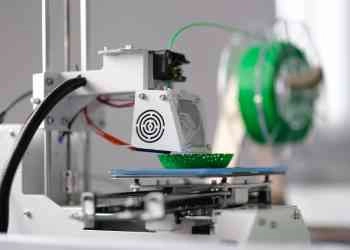
1. Introduction to Rapid Prototyping and 3D Printing:
- Overview of the principles of additive manufacturing, historical context, and the evolution of 3D printing technologies.
2. Types of 3D Printing Technologies:
- Exploration of various 3D printing technologies, including Fused Deposition Modeling (FDM), Stereolithography (SLA), Selective Laser Sintering (SLS), and others.
3. 3D Printing Materials:
- Understanding the range of materials used in 3D printing, including plastics, metals, ceramics, and composite materials.
4. 3D Printing Process Workflow:
- Step-by-step overview of the 3D printing process, from designing a digital model to preparing it for printing and post-processing.
5. Computer-Aided Design (CAD) for 3D Printing:
- Basics of designing 3D models using CAD software, with a focus on design considerations for additive manufacturing.
6. File Formats and Slicing Software:
- Understanding file formats used in 3D printing, such as STL, and using slicing software to prepare models for printing.
7. Print Bed Preparation and Calibration:
- Techniques for calibrating 3D printers, preparing print beds, and ensuring optimal printing conditions.
8. Layer-by-Layer Printing Process:
- In-depth exploration of the layer-by-layer deposition process used in various 3D printing technologies.
9. Post-Processing Techniques:
- Methods for post-processing 3D printed objects, including cleaning, sanding, painting, and finishing for desired aesthetics.
10. Quality Control and Testing:
- Implementing quality control measures, testing prototypes for structural integrity, and assessing print quality.
11. Applications of 3D Printing:
- Examination of diverse applications in industries such as manufacturing, healthcare, aerospace, automotive, and consumer goods.
12. Bioprinting and Medical Applications:
- Overview of bioprinting technologies and their applications in creating biological constructs and medical devices.
13. Customization and Personalization:
- Leveraging 3D printing for customized and personalized products, including personalized prosthetics, orthodontic devices, and fashion.
14. Prototyping for Product Development:
- Utilizing 3D printing as a rapid prototyping tool in product development, iteration, and design validation.
15. 3D Printing in Education:
- Integrating 3D printing into educational curricula, encouraging creativity, and fostering hands-on learning experiences.
16. Sustainability in 3D Printing:
- Considerations for sustainable practices in 3D printing, including eco-friendly materials and waste reduction.
17. Legal and Ethical Considerations:
- Addressing intellectual property issues, regulatory compliance, and ethical considerations in 3D printing.
18. Future Trends and Innovations:
- Exploration of emerging trends, advancements, and potential future developments in the field of 3D printing.
Rapid prototyping and 3D printing education often involves practical projects, hands-on experience with 3D printers, and collaboration with industry partners to provide students with a comprehensive understanding of the technology and its applications.
Comments (14)

Diksha
Student
29 Aug 2022 | 13:42
your blog is a go-to source for quality information.

Advaita Sharma
Student
27 Aug 2022 | 13:59
very good blog

Akash Gupta
Student
15 Sep 2022 | 18:27
Thank you for your commitment and effort to this blog

Rian Patel
Student
2 Oct 2022 | 18:32
Your perspective adds a valuable layer to the topic

Zara Joshi
Student
20 Sep 2022 | 18:45
The practical advice you offer is exactly what I needed
Akash Gupta
Student
10 Nov 2022 | 10:32
Your blog is a testament to your expertise and dedication

Asim Riaz
Student
12 Dec 2022 | 11:08
I appreciate the thoughtfulness behind each of your blog
Asim Riaz
Student
28 Oct 2022 | 11:09
Your blog consistently delivers high-quality, informative content

Aarusha Nair
Student
7 Oct 2022 | 15:20
A fascinating journey into the world of rapid prototyping and 3D printing

Ayushmaan
Student
26 Sep 2022 | 16:37
Your blog resonates with my experience! Creating a dedicated study space has transformed my online learning journey, bringing focus and productivity to a whole new level."
Sagar Dusadh
Student
19 Sep 2022 | 19:38
very informative blog
Avantika Dahiya
Student
30 Jan 2024 | 18:50
Bringing focus and productivity to a whole new level
Aarav Bhatia
Student
1 Feb 2024 | 14:00
Your insights are highly appreciated

Categories
Recent posts


Biometric Authentication: The Future of ...
13 Jan 2024
ChatGPT
15 Nov 2023
Navigating the Digital Classroom: Tips ...
9 Aug 2023


our blog is a go-to source for quality information.