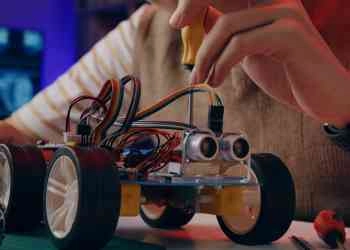
1. Introduction to Educational Robotics:
- Understanding the role of robotics in special education.
- Exploring the benefits and potential outcomes for students with special needs.
2. Adapting Robotics for Diverse Abilities:
- Tailoring robotics programs for different types of disabilities.
- Adapting hardware and software to meet the specific needs of individual students.
3. Educational Goals and Learning Outcomes:
- Establishing educational objectives for students with special needs.
- Defining measurable learning outcomes related to cognitive, motor, and social skills.
4. Robotics Platforms and Tools:
- Overview of robotics platforms suitable for special education.
- Introduction to user-friendly programming tools and interfaces.
5. Hands-On Robotics Activities:
- Designing and implementing hands-on, interactive robotics activities.
- Integrating age-appropriate and curriculum-aligned lessons with robotics.
6. Cognitive Development through Robotics:
- Enhancing cognitive skills through problem-solving activities.
- Incorporating robotics into activities that stimulate critical thinking and decision-making.
7. Motor Skills Development:
- Using robotics to support the development of fine and gross motor skills.
- Implementing activities that focus on coordination, balance, and spatial awareness.
8. Social and Communication Skills:
- Designing activities that promote social interaction among students.
- Using robotics to facilitate communication and collaboration.
9. Individualized Learning Plans (ILPs):
- Developing ILPs tailored to the unique needs of each student.
- Aligning robotics activities with the goals outlined in students' Individualized Education Programs (IEPs).
10. Assistive Technologies Integration:
- Exploring the integration of robotics with assistive technologies.
- Using robotics to enhance accessibility and support students with specific needs.
11. Data Collection and Progress Monitoring:
- Implementing strategies for data collection on student progress.
- Using robotics activities as a means to assess and track developmental milestones.
12. Collaboration with Special Education Professionals:
- Facilitating collaboration between robotics educators and special education professionals.
- Ensuring a multidisciplinary approach to student support.
13. Inclusive Classroom Practices:
- Promoting inclusivity and diversity within the robotics classroom.
- Creating an environment that celebrates differences and encourages peer support.
14. Parent and Caregiver Involvement:
- Engaging parents and caregivers in the educational robotics experience.
- Providing resources and support for continued learning at home.
15. Ethical Considerations in Special Education Robotics:
- Addressing ethical concerns related to the use of robotics in special education.
- Ensuring privacy, consent, and a respectful approach to individual needs.
16. Professional Development for Educators:
- Providing training and professional development opportunities for educators working with educational robotics in special education.
- Continuous learning and adaptation based on best practices.
17. Case Studies and Success Stories:
- Analyzing case studies of successful implementation in special education settings.
- Learning from real-world examples of positive outcomes.
18. Research in Educational Robotics:
- Staying informed about the latest research findings and innovations in the field.
- Encouraging educators to contribute to the body of knowledge through action research.
Educational Robotics in Special Education is designed to create an inclusive and supportive learning environment, leveraging the interactive and motivating aspects of robotics technology to address the unique needs of students with disabilities.
Comments (13)

Aakash Chauhan
Student
17 Aug 2022 | 12:30
A must-read for those interested in inclusive and innovative educational approaches. Well prepared and informative
Parth Rathod
Student
23 Aug 2022 | 13:48
This blog highlights the transformative role of robotics in special education
Vivaan Tomar
Student
3 Sep 2022 | 14:00
Short and sweet, yet rich in content. A must read for those interested in education and robotics
Dhruv Solanki
Student
8 Sep 2022 | 14:45
Interesting read! This blog is a valuable resource for teachers and enthusiasts interested in special education robotics

Karan Gupta
Student
16 Sep 2022 | 15:03
Great blog! Packs a punch in providing valuable insight into the transformative potential of robotics in special education
PrathamAgrawal
Student
12 Sep 2022 | 15:23
Insightful and motivating! A glimpse into how robotics is shaping special education positively
Vihaan Khandelwal
Student
19 Oct 2022 | 15:40
Well-articulated and informative, this blog provides a quick understanding of the positive impact of educational robotics in special education

Kunal Maheshwari
Student
22 Oct 2022 | 15:52
A glimpse into how robotics is shaping special education positively
Ritesh Oswal
Student
10 Nov 2022 | 16:26
Educational robotics in special education reveals the transformative power of technology in creating inclusive and engaging learning environments
Sagar Dusadh
Student
19 Dec 2022 | 19:40
Its integration of personalized learning and real-world application is a positive change for students. thanks to the author
Shivansh Dalit
Student
20 Oct 2022 | 12:22
Sterling for author
Vihaan Khanna
Student
2 Feb 2024 | 13:24
A look at how robotics is having a positive impact on special education

Categories
Recent posts


Biometric Authentication: The Future of ...
13 Jan 2024
ChatGPT
15 Nov 2023
Navigating the Digital Classroom: Tips ...
9 Aug 2023


This blog on educational robotics in special education is really informative! The concept of making learning interactive through robotics is impressive. The integration of personalized learning and real-world application is a positive change for students